How to Pass the CPC® Exam the First Time
 Victoria Vo

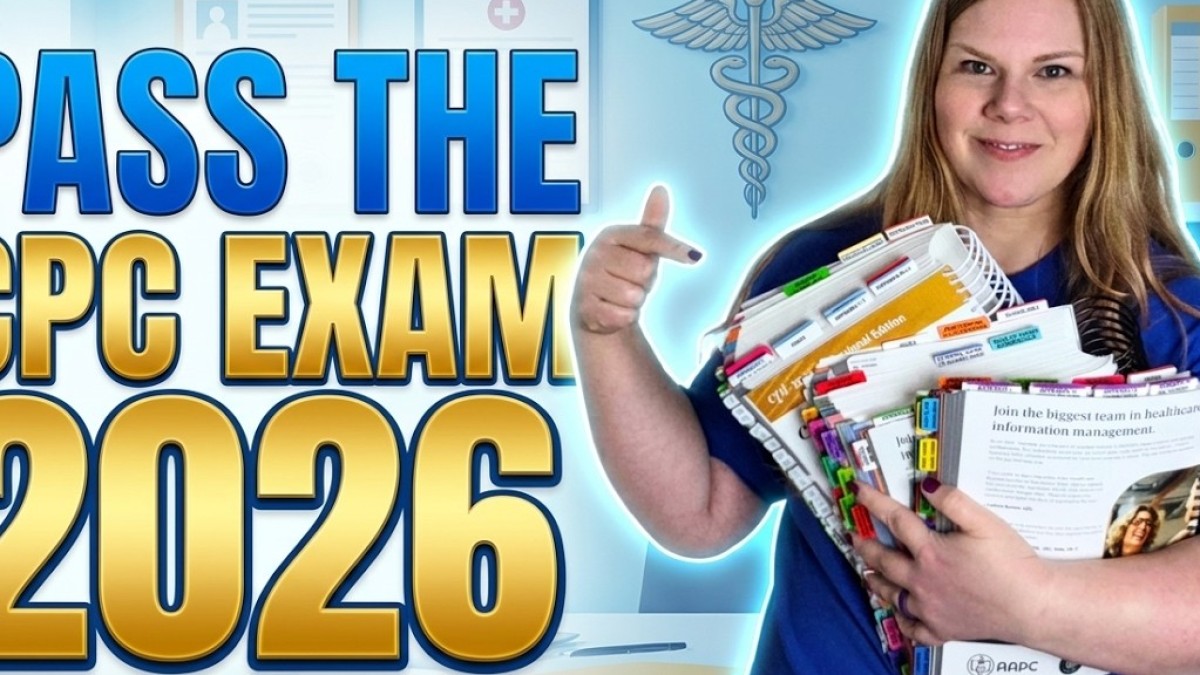
A step-by-step roadmap to pass the CPC exam on your first try: build a real foundation, practice smart, learn your books, and manage your time on exam day.
If you're looking for a quick hack to pass the CPC® exam, I'm going to be honest with you: this isn't that post. There's no secret list of ten things to memorize. The CPC exam isn't easy, and it's not supposed to be. It's designed to test whether you can actually think like a medical coder.
The good news? Passing on your first attempt is very doable. After almost 20 years in this industry, here's the roadmap I'd give you.
What the CPC exam is really testing
The CPC exam isn't just checking whether you can open a book and find a code. It's testing whether you can interpret documentation, apply the coding guidelines, navigate your manuals, and pick (or validate) the right code within a limited amount of time.
Here's the format as I've described it in my videos:
- 100 multiple-choice questions in 4 hours, which works out to about 2 minutes and 24 seconds per question.
- You can use your approved CPT®, ICD-10-CM, and HCPCS Level II code books, either your own paper books or the ebooks built into the exam platform.
- No Google, no encoder, no AI assistant, no phoning a friend. You're not even allowed a pen or highlighter in the exam room, so any notes in your books need to be there before exam day.
Exam details can change, so always check AAPC for current exam details, including what you can bring and what you can write in your books, before you test.
Step 1: Build a real foundation first
This is where a lot of people stumble. They piece together random things from online, then jump straight into study guides or mock exams. That's like trying to run a marathon without ever training or stretching.
Before you focus on certification, you should be comfortable with:
- Anatomy and medical terminology
- ICD-10-CM, CPT, HCPCS Level II, and modifiers
- Evaluation and management (E/M) and surgical concepts
- Coding guidelines
- Basic compliance and insurance concepts, like HIPAA and coverage determinations
You don't have to be an expert in every specialty. (Thank goodness, because if I had to master cardiology, I'd cry.) But reading a case shouldn't feel like a different language.
Study guides and review courses are built for people who already have that foundational training. They don't teach Medical Coding 101, and honestly, the code books don't either. In my experience, learning medical coding usually takes people somewhere around 6 to 9 months.
Structured training helps a lot of people here because it walks you through things step by step instead of in some random order. If you're looking for a program, I recommend Preppy's online, self-paced medical billing and coding program. (Contempo Coding is a paid partner of Preppy.)
Step 2: Don't sabotage your own training
I recently saw a post from someone about to sit for the CPC exam who was panicking. They'd finished every assignment and quiz, but they'd Googled answers and copy-pasted homework into AI tools the whole way through. Their work was done. The skill wasn't built.
It's tempting to chase the check mark. But the struggle on a hard case is part of the learning. Every time you jump straight to the answer, you skip the process of working through the index, tabular list, guidelines, and modifiers. It's like learning to drive but having someone else take over every time you hit a roundabout.
I'm not saying never look anything up. Experienced coders research all the time. But the order matters:
- Try the question yourself first.
- Read the documentation and pull out the key diagnosis or procedure details.
- Go to your manuals and the guidelines, and make a decision.
- Then use outside resources to clarify what you didn't understand.
Looking up a wacky abbreviation? Totally fine. Pasting the whole question into AI and copying the answer? That's practicing copy and paste, and AI coding answers are often very confidently wrong. Technology can be a tutor, not a substitute.
Step 3: Do the practice cases (yes, the long ones)
If your program includes practice cases, complete them. Don't skip the long ones. Don't avoid the specialties you dislike. Cases teach you to translate documentation into codes, and they build the endurance you'll need for a four-hour exam.
When you get one wrong, dig into why. Skipped the tabular list? Missed a character extension, a "code first" note, or a modifier? Moved too fast, or overthought it? That's how you find your weak spots.
Use what you already have, too. If you only did the odd-numbered textbook questions, go back and do the even ones.
Step 4: Get to know your code books
The CPC exam is partly a knowledge test and partly a navigation test. You need to move through your books quickly.
That doesn't mean turning every page into one of those conspiracy walls from a true crime show. Keep your notes targeted: where to find things, add-on reminders, abbreviations you always forget. Tab your major sections so you know roughly where everything lives.
If you go with the ebooks, you won't have your notes, but you can search. Just know you only get access to them during the exam itself.
Step 5: Shift into exam mode
Once the foundation is there, it's time to study the exam itself: the structure, the format, the pacing, and the concepts most likely to show up. My suggestion is to schedule your exam a few weeks after you finish your training, so everything is still fresh.
This is where a CPC review can be a great final polish. I have an on-demand CPC review course that includes a 50-question practice exam so you can gauge your readiness. Just remember, a review is the final prep, not a replacement for training.
I personally prefer the official AAPC study guide and practice exams, because they reflect the real question style and they mimic the exam platform.
Be careful with third-party practice materials. A lot of cheap, quickly made question banks have outdated questions, wrong rationales, or invalid codes. Check the author's credentials, and if someone's promising a thousand questions for 20 bucks, it's probably too good to be true.
Step 6: Practice like it's exam day
Take your practice exams under realistic conditions: only the books you'll be allowed, no second monitor, nothing extra on your desk, no Googling, and no pausing the clock for a bathroom break, because the real clock won't stop either.
Build your pace in chunks. Start with 25 questions in one hour. A 50-question practice exam should take you about two hours.
For study sessions, try the Pomodoro technique: focused 25-minute blocks with 5-minute breaks. Four rounds beats five distracted hours of half-scrolling TikTok.
Afterward, review every question, even the ones you got right, since you might have guessed.
Time management on exam day
Every question is worth the same. A quick question about blood flow through the heart counts just as much as a three-page op note. So don't let one monster case eat your clock.
Try a three-pass approach:
- Pass one: Answer the easy questions you know right away.
- Pass two: Go back for the medium ones that need a quick lookup.
- Pass three: Tackle the long, tough cases you flagged.
For long cases, I like to look at the answer choices first so I know what I'm hunting for, then read the case.
Check your progress as you go. Roughly 25 questions done after the first hour and around 50 after two hours keeps you on track. If you're almost out of time, don't leave anything blank. A guess at least gives you a chance.
And learn the platform before test day. Skipping and flagging questions is built in, but there's no tutorial right before you start. When you get your notice to schedule, the email includes a link to a platform tutorial. Watch it! Also be careful clicking "next" at the end, because that button can change to "finish exam," and once you submit, you can't go back.
Prep for test day itself
If you're testing remotely with a live proctor, read the setup instructions very carefully. I've seen people get disconnected and lose their attempt over technical problems, a second monitor, or items in the room they weren't supposed to have. Check the official exam day checklist so you know what you can and can't bring, whether you're testing remotely or in person.
Eat a good meal, drink water, and go easy on the iced coffee. When you hit submit, take a deep breath. You just made it through a seriously tough exam.
Remember the bigger goal
Passing the CPC exam is a big hurdle, but it's not the final test of whether you can code. Most employers also give a pre-employment coding assessment, some now proctored over video. On the job, tools help, but you still need the knowledge to spot a suggested code that doesn't make sense.
If you're realizing you've leaned too hard on shortcuts, don't panic. Redo your practice cases without outside help and take timed practice exams honestly. You can still get there. When you're job hunting, these tips to find a medical coding job will help.
The bottom line
You don't need a shortcut. You need a solid foundation, consistent practice, and a clear exam strategy. Get real training, actually do the work, learn your books, then spend a few focused weeks on timed practice with reputable materials. You've totally got this.
Prefer to watch? The full video is embedded at the top of this post, and you can find more free tutorials on the Contempo Coding YouTube channel.
